
Choosing a school in Bengaluru's Sarjapur corridor can feel a little like choosing a restaurant in a food capital. There are plenty of impressive options, established names, excellent reputations and different experiences to consider. The international school landscape is equally diverse, with IB, Cambridge and other curricula available across the area.
For parents, this is good news. It means there is an opportunity to find a school that genuinely matches a child's academic needs, interests and aspirations.
But how do you make that decision?
As an experienced IBDP Biology and ESS educator and EE Coordinator at United World Academy (UWA), I would encourage parents to look beyond a single question ("Which is the best school?") and ask a more useful one: Which school is the best fit for my child, and how will it help them grow?
Here is a practical, academically informed checklist to guide that decision.
1. Start with the curriculum, not the brochure
The first step is to understand what your child will actually study.
Cambridge IGCSE and the IB Diploma Programme are internationally recognised qualifications, but they have different structures, assessment approaches and learning expectations. Cambridge IGCSE offers a broad subject-based foundation, while the IBDP combines six subject groups with the Extended Essay, Theory of Knowledge and CAS.
Ask whether the school offers the curriculum you are considering, whether it has the appropriate authorisation and what progression looks like for your child.
2. Look for a clear academic pathway
A school may offer an excellent programme at one stage and a different programme at another. That is not necessarily a disadvantage, but parents should understand the transition.
Does the school offer Cambridge IGCSE followed by IB Diploma? Does it offer a full IB continuum? What happens when a student moves from one programme to another?
At UWA, the availability of both Cambridge and IB pathways allows families to consider their child's progression with a broader perspective. The important question is whether the transition is supported through curriculum planning, subject guidance and academic preparation.
3. Ask what happens inside the classroom
A modern campus is attractive. A thoughtful classroom is transformative.
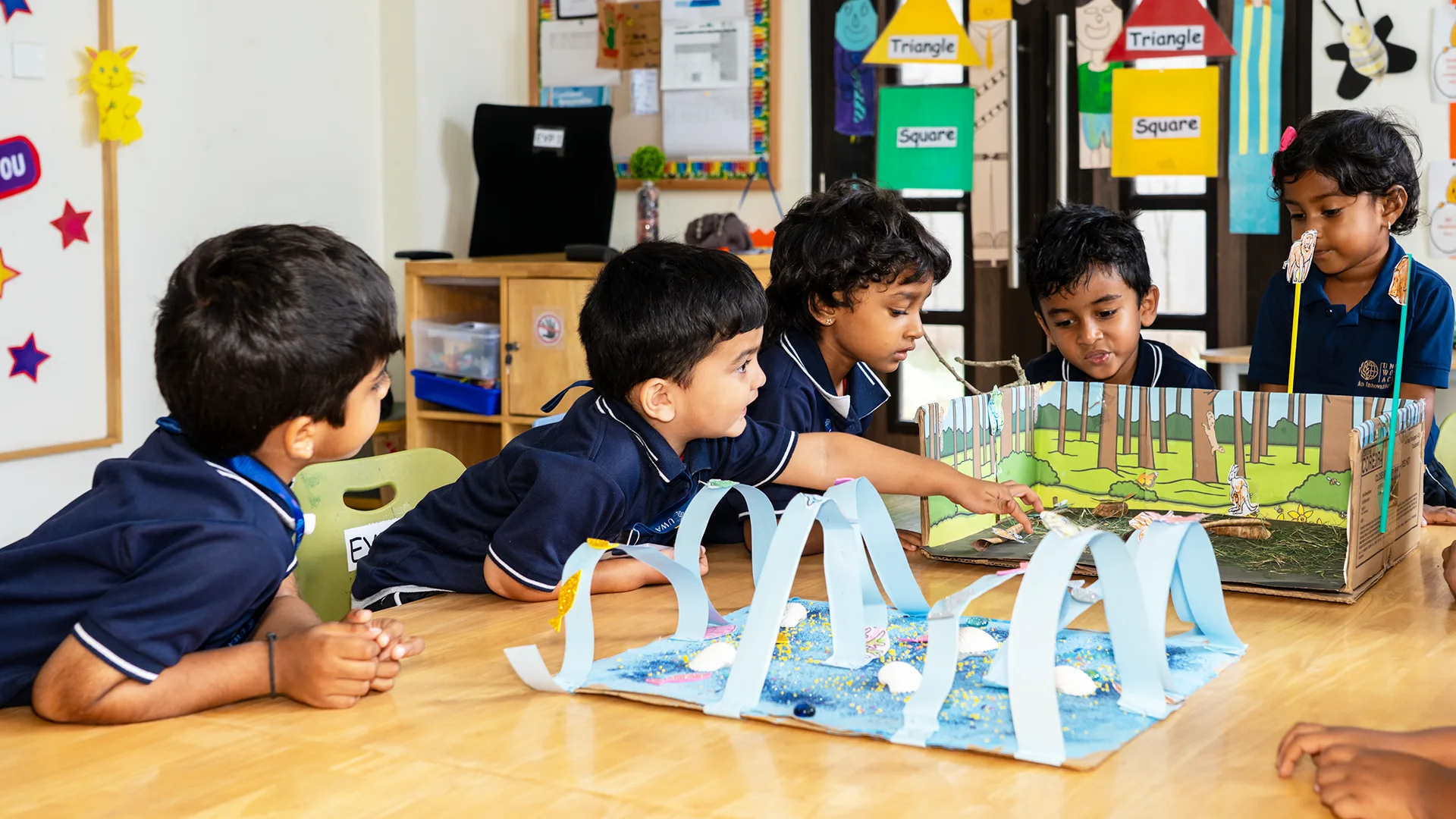
During a school visit, ask to see learning in action. Are students explaining ideas, analysing evidence and solving problems? Does the teacher ask meaningful questions? Are students encouraged to make connections between concepts and the world around them?
In Biology, inquiry might involve designing an investigation. In ESS, it might involve evaluating a real environmental issue. In TOK, it might involve examining how evidence supports a claim.
The IB's research on inquiry-based teaching highlights student agency, conceptual learning, meaningful connections to life and supportive teacher guidance as important features of inquiry.
4. Check the quality of subject teaching
A school's academic reputation is built over time, but the quality of everyday teaching matters just as much.
Ask about teacher qualifications, subject expertise, professional development and continuity. For senior secondary students, enquire about the teachers responsible for the subjects your child intends to take.
A Biology student needs more than access to a laboratory. They need a teacher who can explain complex concepts, guide experimental design, challenge scientific reasoning and provide constructive feedback.
The same principle applies across subjects. Strong subject knowledge and effective pedagogy are the foundation of meaningful learning.
5. Understand assessment and feedback
Good assessment is not simply about producing a grade. It should help students understand what they know, what they need to improve and how to improve it.
Ask how often students receive feedback, how teachers use assessment to adapt instruction and whether students are given opportunities to revise their work.
For the IB Diploma Programme, understanding assessment criteria, command terms and subject-specific expectations is particularly important. At UWA, a focus on continuous formative assessment can help students develop the skills needed for more demanding academic tasks.
6. Look beyond examination results
Academic results are an important part of evaluating a school. They demonstrate student achievement and can provide evidence of effective teaching.
However, a result is not the whole story.
Ask about the school's assessment approach, the range of subjects offered, student support and how results are interpreted. Be cautious of broad claims that do not explain what the figures represent.
A school with a strong reputation deserves recognition for its achievements. A thoughtful parent will also want to understand the learning environment that helps students achieve those results.
7. Explore university guidance
For families considering an international curriculum, university planning should begin well before the final year of school.
Ask when university counselling starts, how students are guided in choosing subjects, and how the school supports applications to universities in India and abroad.
The IB Diploma Programme provides a broad academic foundation, but university admission requirements vary by institution and country. Cambridge International also provides university recognition guidance for its qualifications.
At UWA, parents should look for a school culture that connects subject choices, academic progress and future aspirations.
8. Consider the DP Core and independent learning
The DP Core is one of the distinctive features of the IB Diploma Programme.
The Extended Essay develops independent research. TOK encourages reflection on knowledge. CAS provides opportunities for creativity, activity and service.
These components require students to manage time, communicate effectively, reflect on feedback and take responsibility for their learning.
If your child is considering the IB Diploma, ask how the school introduces these expectations and supports students through them.
9. Examine the balance of academics and wellbeing
A demanding curriculum should be accompanied by appropriate support.
Ask about pastoral care, student wellbeing, academic mentoring and how teachers identify students who may need additional help.
The goal is not to remove challenge. It is to help students develop the confidence and resilience to meet it.
A school that understands the relationship between wellbeing and learning can help students remain engaged and motivated throughout their academic journey.
10. Evaluate opportunities beyond the classroom
International education is not only about examinations.
Ask what opportunities students have in sports, performing arts, creative activities, service learning, leadership and clubs. More importantly, ask whether these opportunities are meaningful and accessible to students.
At UWA, a well-rounded education can include opportunities for students to explore interests, collaborate with others and develop confidence beyond their academic subjects.
11. Visit the campus with a purpose
A campus tour should be more than a walk through impressive buildings.
Look at classrooms, laboratories, libraries, sports facilities and common spaces. Ask whether students have access to the resources required for their programmes.
Consider the school's location, transport arrangements and daily routine. Sarjapur is a growing educational corridor, but commuting time remains an important practical consideration for families.
A school that is academically excellent should also be manageable for your child's everyday life.
12. Ask the most important question: Is this the right fit?
After reviewing the curriculum, teaching, assessment, facilities and support systems, return to your child.
What are their interests? How do they learn best? Are they ready for a particular academic pathway? What kind of environment will help them become more confident and independent?
The best school is not necessarily the one with the largest campus, the most impressive marketing or the highest published score. It is the school where the child's academic needs, interests and aspirations are understood and supported.
A thoughtful choice begins with the right questions
Sarjapur's international school landscape offers families a valuable opportunity to explore different educational pathways. The presence of established schools and strong academic programmes means that parents can compare thoughtfully rather than settle for the first available option.
At United World Academy, we believe that choosing a school is .
The right questions help families make informed decisions. The right school helps students turn those decisions into meaningful learning, academic progress and personal growth.
So, before you finalise your shortlist, take a deep breath, carry your checklist and ask a few more questions.
After all, the best school choice is not just about where your child will study. It is about who your child will become while they are there.
Curious what that looks like at UWA? .